Italian · Free recipe
Cacio e Pepe
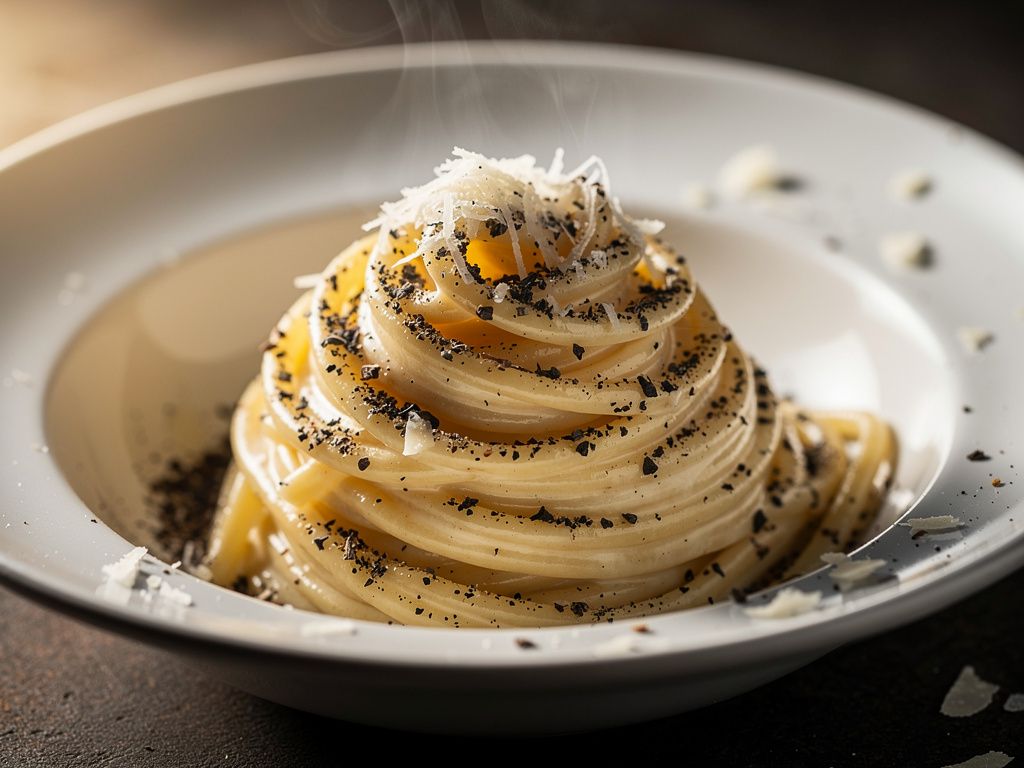
Just pasta, Pecorino Romano, and black pepper transformed into a creamy, peppery, cheese-coated masterpiece. A three-ingredient Roman marvel of technique.
Step 1
Bring a large pot of about 4 quarts of water to a boil and add just 1 tablespoon salt. Use less water than usual so it becomes very starchy, which is critical for the sauce.
Step 2
Add the spaghetti and stir. Cook until al dente, about 1 minute less than the package time.
Step 3
While the pasta cooks, put the black pepper in a large skillet over medium heat and toast it for about 1 minute, until it smells fragrant. Toasting wakes up the pepper's aroma.
Step 4
Add a ladle of the starchy pasta water, about 1/2 cup, to the skillet with the pepper and let it simmer for 30 seconds, then turn off the heat.
Step 5
Put the grated Pecorino in a medium bowl. Add a few tablespoons of the pasta water and stir into a thick, smooth paste, adding a little more water as needed. This paste method prevents clumping.
Step 6
Before draining, scoop out and reserve 2 cups of the starchy pasta water.
Step 7
Drain the spaghetti, then add it to the skillet with the peppery water. Toss with tongs for 30 seconds to coat.
Step 8
Let the pan cool for about 1 minute so it is warm but not hot, which keeps the cheese from clumping into a rubbery ball.
Step 9
Add the Pecorino paste to the pasta and toss vigorously with tongs, adding splashes of reserved pasta water a little at a time.
Step 10
Keep tossing for about 2 minutes until a smooth, creamy, clingy sauce forms and coats every strand. If it clumps, add a bit more warm water and keep working it.
Step 11
Serve immediately in warm bowls with an extra grind of black pepper on top.
Tips from the test kitchen
- Let the pan cool slightly before adding cheese; high heat is what causes the dreaded clumpy sauce.
- Grate the Pecorino as finely as possible so it melts smoothly into the water.